
















A Behind-the-Scenes Story of How Cars Leave India for the World
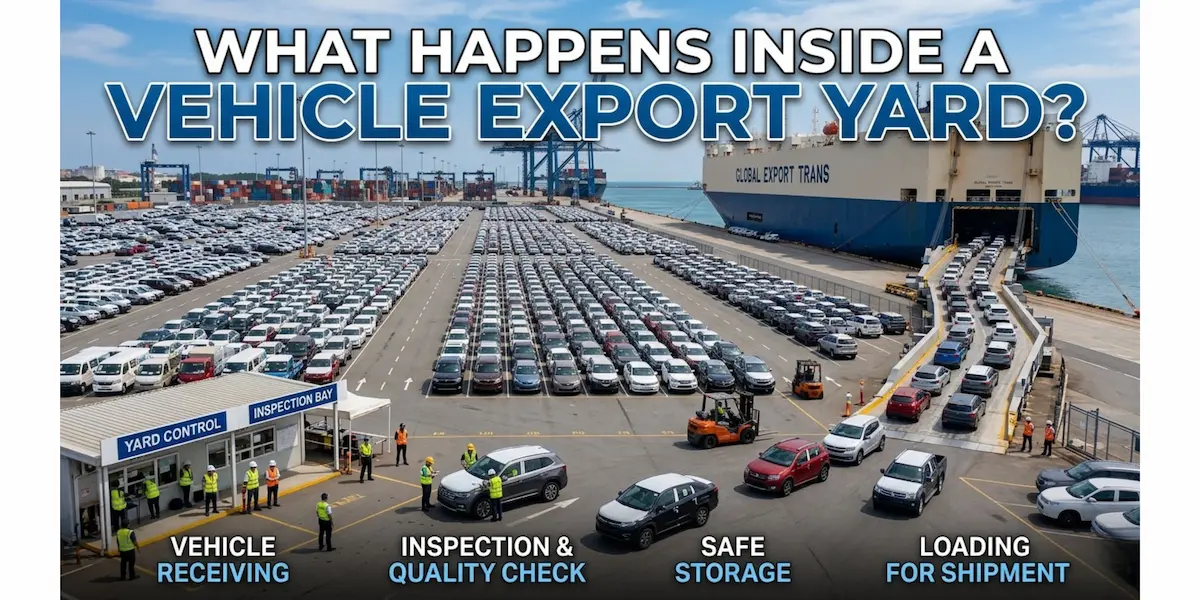
Imagine standing at a massive port somewhere along India’s coastline early in the morning. The sun has just started rising, the air smells faintly of the sea, and in front of you stretches what looks like a city made entirely of cars.
Thousands of vehicles sit in neat rows, SUVs, motorcycles, pickup trucks, and commercial vehicles, each waiting patiently for the same thing: a journey across the ocean.
This is what a vehicle export yard often looks like. And although most people never see it, this is where the fascinating process of export vehicles to USA from India and other global markets truly begins.
The Arrival: Vehicles Enter the Export Yard
The trucks begin arriving at the export yard around 8 AM.
Each truck carries newly manufactured vehicles from factories located across India. Some come from automotive hubs in Gujarat, Maharashtra, Tamil Nadu, or Haryana, regions known for large-scale automobile manufacturing.
One by one, the vehicles are unloaded and carefully driven into the yard by trained drivers.
Every car entering the yard goes through a verification process:
Vehicle identification number (VIN) check
documentation verification
export order confirmation
destination tagging
This step ensures that the correct vehicles are matched with the right international buyers who plan to import electric vehicles from India or gasoline vehicles for their markets.
At this point, every car becomes part of a global logistics puzzle.
The Inspection: Quality Checks Before Export
Before any vehicle leaves the country, it undergoes another round of inspection.
In our hypothetical export yard, a team of inspectors walks slowly through the rows of vehicles with tablets in their hands. They check things like:
exterior condition
tire pressure
battery status
fuel levels
shipping protection materials
Even a small scratch or dent could become a major issue once the vehicle reaches another continent.
For businesses involved in exporting vehicles from India, quality control is extremely important because vehicles often travel thousands of kilometers by sea.
If something isn’t perfect, it gets fixed immediately.
The Waiting Zone: A Temporary City of Cars
Once inspection is complete, the vehicles are parked in organized sections depending on their destination.
One row may contain SUVs heading to Africa.
Another section may hold motorcycles bound for Southeast Asia.
Some vehicles might even be prepared for future shipments that will import vehicles from India to the United States.
Standing in the middle of this yard feels surreal. The cars are silent, but every single one represents a buyer somewhere across the world waiting for delivery.
In a way, this place is like a temporary international showroom, except the customers are thousands of kilometers away.
Preparing for the Ship: Logistics in Motion
As shipping schedules approach, the yard becomes more active.
Export coordinators begin organizing vehicles according to the cargo ship that will carry them. The two most common methods for international vehicle shipping are:
Roll-on/Roll-off (RoRo)
Vehicles are driven directly onto specialized cargo ships designed to carry cars.
Container Shipping
Vehicles are placed inside large shipping containers, which provide additional protection during transport.
For companies managing to export vehicles to USA from India, container shipping is often preferred for high-value vehicles or specialized shipments.
Drivers carefully line up the vehicles near the loading zones, preparing them for the next stage of the journey.
The Moment of Departure
Finally, the cargo ship arrives.
In our hypothetical scenario, it’s a massive vessel capable of carrying thousands of vehicles at once.
Drivers begin moving the cars slowly toward the ship’s loading ramp. One by one, they disappear inside the vessel.
It’s a strangely emotional moment.
A car that rolled off an Indian factory line just weeks ago is now about to travel across oceans, heading toward a completely different country, culture, and road network.
For importers planning to import electric vehicles from India or gasoline vehicles for their dealerships, this is the moment when the supply chain truly becomes global.
The Global Journey Begins
Once the ship departs, the vehicles begin a journey that may last several weeks.
Depending on the destination, the cargo ship could travel through:
the Arabian Sea
the Suez Canal
the Mediterranean Sea
the Atlantic Ocean
Eventually, the ship reaches its destination port where the vehicles will go through customs and begin their final journey toward dealerships and customers.
For companies involved in import- export vehicles from India, this final step often includes regulatory checks and documentation verification before the vehicles can enter the American market.
Why Export Yards Matter in the Global Automotive Industry
Although they are rarely seen by the public, export yards play a critical role in the global automobile trade.
They serve as the point where:
manufacturers
exporters
shipping companies
international buyers
all connect in a complex logistics network.
Without these hubs, the global movement of vehicles, from motorcycles to SUVs and even best electric cars from India, would be far more difficult.
Conclusion
The next time you see a car on the road in another country, it’s worth remembering that it may have traveled an incredible distance to get there.
Before reaching its new owner, it likely spent time in a place much like the vehicle export yard, waiting quietly among thousands of other vehicles for its turn to cross the ocean.
From factory floor to shipping yard to international highways, the journey of a vehicle is far more complex than most people realize.
And somewhere along that journey, businesses dedicated to export vehicles to USA from India and other global markets help connect manufacturers with drivers around the world.
That is the hidden story behind the global automotive trade.
Note: The story below is a hypothetical narrative created to illustrate how the vehicle export process generally works. While the steps reflect real industry practices, the characters, locations, and events described are fictional and meant purely to help readers understand how vehicles are exported from India.