
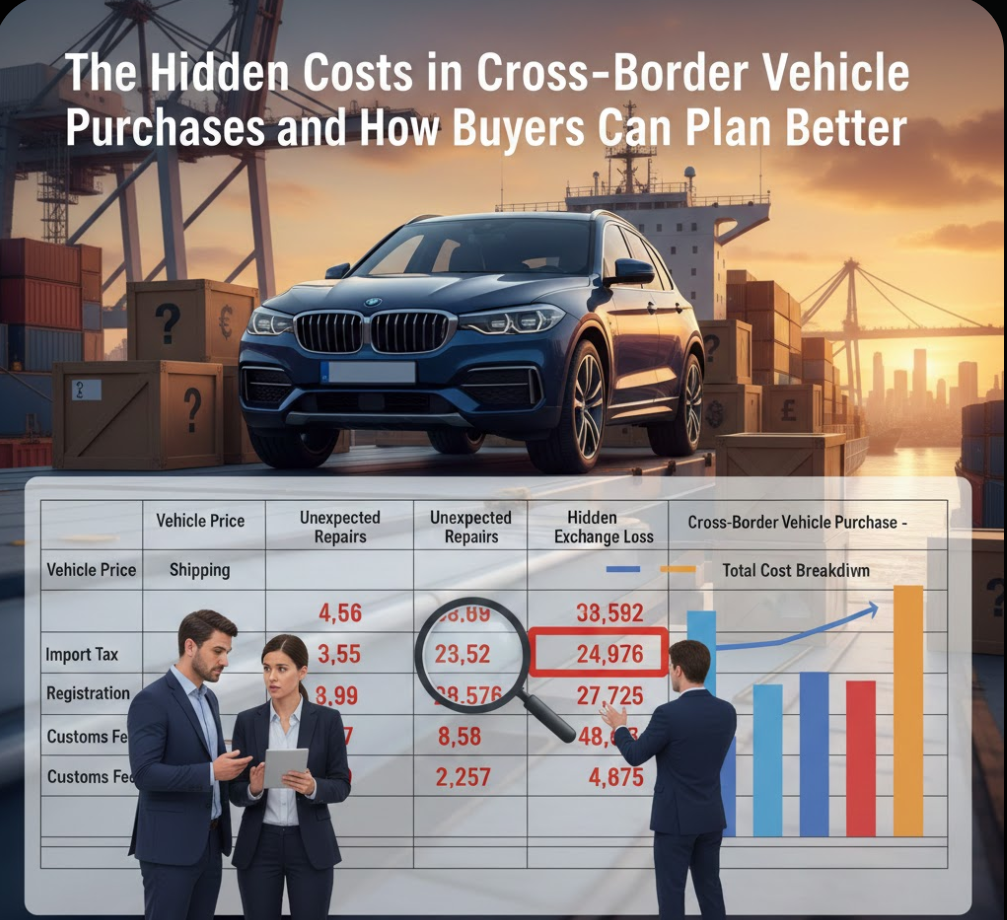
















On paper, cross-border vehicle purchases often look simple. You choose a vehicle, agree on a price, arrange shipping, and wait for delivery. For many buyers exploring vehicle import from India or export cars from India, that initial calculation feels straightforward.
In reality, the journey is rarely that linear.
At Horizon Enterprise, we have worked with buyers across regions, vehicle types, and use cases. Over time, one pattern repeats itself. Most unexpected problems do not come from the vehicle itself. They come from costs and decisions that were not visible at the beginning.
This blog is not about discouraging cross-border purchases. It is about understanding the hidden costs that tend to surface during international vehicle trade, and how buyers can plan better to avoid frustration, delays, and budget overruns.
The Price You See Is Rarely the Final Price
When buyers first explore importing vehicles from India or other manufacturing markets, the focus is usually on the vehicle cost. That number feels concrete and easy to compare.
What often gets missed is that the vehicle price is only one part of a much larger equation.
Additional costs tend to appear across multiple stages of the export-import process, and they are spread out in ways that make them harder to anticipate.
Pre-Export Costs That Are Often Overlooked
Before a vehicle even leaves its country of origin, several expenses can arise.
These may include:
Pre-export inspections
Compliance checks based on destination regulations
Documentation preparation and certification
Storage and handling charges at export yards or ports
Inland transportation to the shipping port
For buyers unfamiliar with export from India, these costs can feel unexpected because they are rarely visible in early discussions. However, they are essential for a compliant and smooth export process.
Shipping Is Not Just Freight Charges
Shipping is one of the most misunderstood parts of cross-border vehicle purchases.
Many buyers assume that shipping cost is limited to:
Container or RORO charges
Basic port-to-port freight
In reality, shipping often includes:
Port handling fees at both origin and destination
Terminal charges
Documentation fees charged by shipping lines
Insurance for transit risks
Delays due to port congestion or schedule changes
These variables can change depending on season, port conditions, and global logistics demand. This is why experienced exporters never quote shipping as a fixed number without context.
Customs and Duties Can Vary More Than Expected
Customs-related costs are another area where buyers often underestimate complexity.
Import duties, taxes, and fees depend on:
Vehicle category
Engine type or powertrain
Vehicle age
Declared value
Destination country regulations
Even within the same country, costs can differ based on port of entry or specific import classifications. Buyers planning vehicle import from India to international markets often discover that customs calculations are not as predictable as they assumed.
Compliance Modifications and Local Requirements
One of the most common hidden costs arises after the vehicle arrives.
Depending on the destination market, vehicles may require:
Emission-related modifications
Safety adjustments
Lighting or signaling changes
Software updates or recalibration
Certification or testing by local authorities
These changes are not always known at the start, especially if the buyer is new to import vehicles from India. Without early planning, this stage can introduce delays and additional expenses.
Time Is a Cost That Rarely Gets Budgeted
While buyers often plan financially, they do not always plan for time.
Delays can occur due to:
Documentation mismatches
Customs inspections
Port congestion
Compliance verification
Regulatory clarifications
For businesses, time delays translate directly into operational costs. For individual buyers, they create uncertainty and frustration. This is one of the most underestimated aspects of international vehicle purchases.
Why Planning Matters More Than Bargaining
Many buyers focus heavily on negotiating the vehicle price, but overlook planning the full journey.
In our experience, successful buyers do three things differently:
They ask detailed questions early
They budget for variables rather than fixed numbers
They work with exporters who understand both sides of the transaction
Planning does not eliminate all surprises, but it significantly reduces their impact.
How Buyers Can Plan Better
Based on what we have seen across multiple markets, here are practical ways buyers can plan more effectively.
1. Ask for a Total Cost Perspective
Instead of focusing only on the vehicle price, ask for a broader cost estimate that includes logistics, compliance, and post-arrival steps.
2. Understand Destination Regulations Early
Each country has its own vehicle import rules. Understanding them early helps avoid last-minute changes.
3. Allow Buffer in Budget and Timeline
Building a margin into both cost and delivery time creates flexibility when unexpected steps arise.
4. Work With Exporters Who Explain, Not Just Execute
A good exporter does not just ship vehicles. They explain risks, options, and trade-offs clearly.
The Role of Experience in Cross-Border Vehicle Trade
Cross-border vehicle purchases are not just transactions. They are processes that involve coordination across manufacturers, ports, regulators, and logistics partners.
At Horizon Enterprise, our role is not limited to export cars from India. It involves anticipating where friction may occur and preparing buyers for it in advance. This perspective comes only from having seen the process repeatedly across different markets and vehicle categories.
Final Thoughts
Hidden costs in cross-border vehicle purchases are rarely the result of bad intent. They are usually the result of complexity.
With better planning, transparent communication, and realistic expectations, importing vehicles from India or any international market can be a smooth and predictable process.
The goal is not to eliminate every variable, but to understand them well enough that they do not become obstacles.
When buyers plan with awareness rather than assumptions, cross-border vehicle purchases stop being stressful and start becoming strategic decisions.