
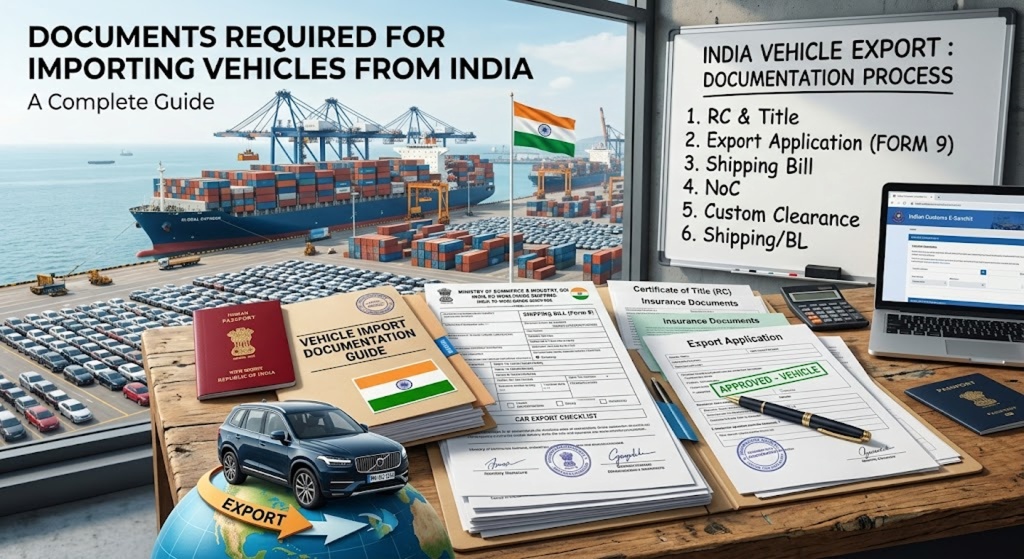














International demand for Indian vehicles continues to grow due to their affordability, reliability, fuel efficiency, and wide range of options. Whether you are importing motorcycles, three-wheelers, passenger cars, commercial vehicles, or electric vehicles, having the correct documentation is essential for a smooth import process.
Incomplete or incorrect paperwork can lead to shipping delays, customs issues, and additional costs. Understanding the required documents beforehand can help ensure that your vehicle reaches its destination without unnecessary complications.
In this guide, we explain the key documents generally required when importing vehicles from India and how an experienced vehicle export partner can simplify the process.
Why Documentation Matters
Vehicle exports involve multiple authorities, including manufacturers, exporters, shipping companies, customs departments, and the destination country’s import authorities. Each stage requires specific documentation to verify ownership, compliance, and shipment details.
Proper documentation helps:
Ensure smooth customs clearance
Reduce shipment delays
Verify vehicle authenticity
Comply with international trade regulations
Avoid unnecessary penalties and storage charges
Essential Documents Required for Vehicle Import
1. Commercial Invoice
The commercial invoice is one of the most important export documents. It contains details such as:
Exporter’s information
Buyer’s information
Vehicle description
Chassis number
Engine number (where applicable)
Quantity
Unit price
Total invoice value
Payment terms
Customs authorities use this document to determine the value of the imported vehicle.
2. Packing List
The packing list provides information about the shipment, including:
Number of vehicles
Vehicle dimensions
Gross and net weight
Shipping marks
Packaging details (if applicable)
This document helps customs officials and shipping companies verify the shipment contents.
3. Bill of Lading (B/L)
The Bill of Lading is issued by the shipping line after the vehicle has been loaded onto the vessel.
It serves as:
Proof of shipment
Receipt of goods
Document of ownership
Transport contract
Without the Bill of Lading, the importer may not be able to claim the shipment at the destination port.
4. Certificate of Origin
The Certificate of Origin confirms that the vehicle was manufactured or exported from India.
Many countries require this document to determine:
Import duty eligibility
Trade agreement benefits
Country of manufacture
5. Export Declaration
Indian customs require exporters to submit export declarations before shipment. This document confirms that the vehicle has been legally cleared for export according to Indian regulations.
6. Insurance Certificate
Marine insurance protects the shipment against risks such as:
Transit damage
Theft
Fire
Natural disasters
Although insurance requirements may vary, it is highly recommended for international shipments.
7. Vehicle Registration Documents (When Applicable)
Depending on whether the vehicle is new or used, registration-related documents may be required.
For new vehicles, exporters generally provide manufacturer documentation.
For used vehicles, previous registration records may also be necessary depending on the importing country’s regulations.
8. Manufacturer’s Certificate or Vehicle Compliance Documents
Many countries require documents confirming that the vehicle meets manufacturing standards and specifications.
These documents may include:
Manufacturer’s Certificate
Vehicle specification sheet
Compliance certificates
Emission standard information
9. Inspection Certificate
Certain importing countries require an inspection before shipment.
This inspection may verify:
Vehicle condition
Safety standards
Roadworthiness
Chassis and engine numbers
Inspection requirements vary from country to country.
10. Import Permit (Destination Country)
Some countries require importers to obtain an import permit before the shipment arrives.
Importers should always verify local regulations with their customs authorities before placing an order.
Additional Documents That May Be Required
Depending on the destination country, additional documentation may include:
Customs declaration forms
Tax payment documents
Emission compliance certificates
Roadworthiness certificates
Import license
Foreign exchange documents
Letter of Credit (for international payments)
Requirements vary across different countries and vehicle categories.
Factors That Affect Documentation Requirements
Documentation may differ depending on several factors:
Vehicle Type
Different requirements may apply for:
Two-wheelers
Three-wheelers
Passenger cars
SUVs
Pickup trucks
Commercial vehicles
Electric vehicles
New vs. Used Vehicles
Many countries have stricter regulations for importing used vehicles, including age restrictions, inspections, and emissions compliance.
Destination Country Regulations
Each country has its own customs policies regarding:
Import duties
Safety standards
Environmental regulations
Vehicle age limits
Technical specifications
Checking these requirements before shipping can prevent costly delays.
Conclusion
Proper documentation is the foundation of successful vehicle imports from India. From the commercial invoice and Bill of Lading to certificates of origin and compliance documents, every document plays an important role in ensuring smooth customs clearance and timely delivery.
Since import regulations vary by country, working with an experienced exporter can help minimize paperwork challenges and streamline the entire process.
If you are planning to import vehicles from India, Horizon Enterprise is committed to providing dependable export support, quality vehicles from leading Indian manufacturers, and professional assistance throughout your import journey.